Online Arabic Classes for Kids: Apps vs Live Tutors vs Hybrid
Parents looking for online Arabic classes for their children face three main options: live tutor sessions, self-paced apps, or a hybrid of both. Each approach has distinct advantages and drawbacks depending on your child's age, level, budget, and schedule. This guide compares all three so you can make an informed decision.
Option 1: Live Online Arabic Tutors
One-on-one or small group classes with a live Arabic teacher over video call.
How It Works
You book regular sessions (typically 30-60 minutes, 1-3 times per week) with a qualified Arabic teacher. Sessions happen over Zoom, Skype, or the platform's proprietary video tool. The teacher follows a curriculum and adapts to your child's level.
Pros
- Human interaction: Children respond to a real person who can read their mood, adjust pacing, and build a relationship.
- Conversation practice: The only way to practice real Arabic conversation is with another person. Apps cannot replicate genuine back-and-forth dialogue.
- Accountability: A scheduled session with a teacher provides structure that self-paced learning lacks.
- Customized feedback: A good teacher notices and corrects errors that even the best AI might miss.
Cons
- Cost: Quality Arabic tutors charge $15-40 per hour. At 2-3 sessions per week, this adds up to $120-480 per month.
- Scheduling: Sessions must happen at fixed times, which can conflict with other activities and homework.
- Teacher quality varies: Not all Arabic teachers know how to teach children. Teaching kids requires different skills than teaching adults.
- Limited practice time: Even 3 sessions per week provides only 1.5-3 hours of Arabic practice. Daily exposure is needed for real progress.
Option 2: Self-Paced Arabic Learning Apps
Apps that provide structured Arabic lessons children can complete independently on a phone or tablet.
How It Works
Your child opens the app and works through interactive lessons at their own pace. The app adapts difficulty, provides AI feedback on pronunciation, and tracks progress automatically. Practice can happen anytime, anywhere.
Pros
- Daily practice: Apps enable the daily consistency that language learning requires. 15 minutes every day is more effective than 1 hour twice a week.
- Cost effective: Most Arabic learning apps cost $10-20 per month, a fraction of live tutoring.
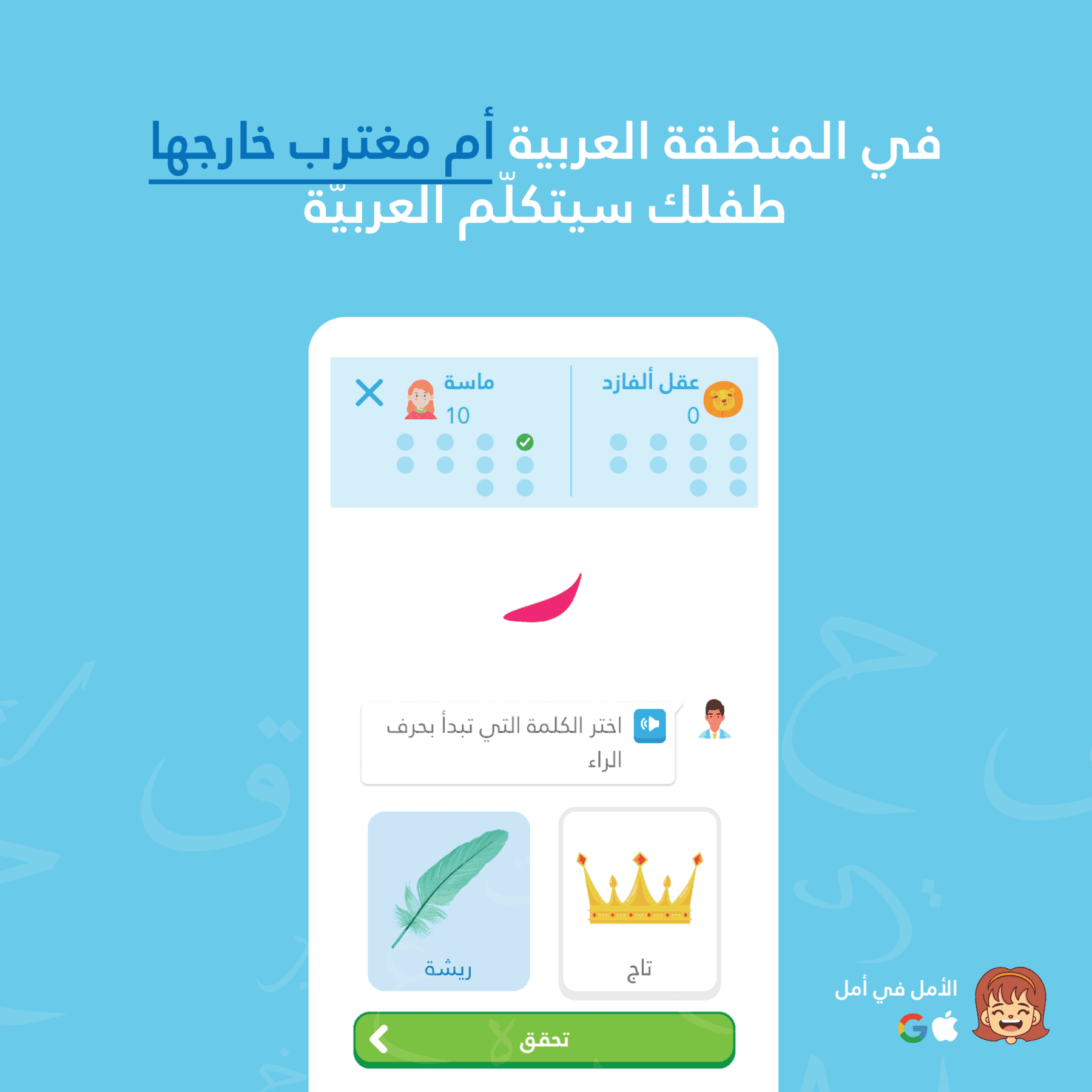
- AI feedback: Apps like Amal use AI trained on children's voices to provide pronunciation feedback. Children can practice speaking without the anxiety of performing in front of a teacher.
- Flexible schedule: Practice fits around your family's routine, not the other way around.
- Gamification: Amal includes 45 exercise types, physics-based games, and animations that keep children engaged. Most children view app time as play, not study.
Cons
- No conversation practice: Apps cannot replicate real conversation. Children learn to understand and produce Arabic but may not develop conversational fluency without human interaction.
- Self-discipline required: Without a scheduled session, it is easy to skip practice. Parents need to ensure consistent daily use.
- Screen time concerns: Some parents worry about additional screen time, though 15-20 minutes of educational app use is well within recommended limits.
Option 3: Hybrid Approach (Recommended)
Combining an app for daily practice with periodic live tutor sessions produces the best results at a reasonable cost.
The Ideal Hybrid Setup
- Daily (15-20 minutes): Amal for structured Arabic lessons with AI pronunciation feedback. This provides the daily repetition and variety that builds skills fastest.
- Weekly (30-60 minutes): One live tutoring session for conversation practice, error correction, and progress assessment. The tutor focuses on skills the app cannot provide: dialogue, cultural context, and nuanced feedback.
- For Quran learning: Add Thurayya for daily Quran reading practice, supplemented by a weekly session with a Quran teacher for tajweed verification.
Why Hybrid Works Best
The app handles the 80% of language learning that is repetition, pattern recognition, and pronunciation practice. The tutor handles the 20% that requires human intelligence: conversation, cultural nuance, and personalized guidance. Total cost is typically $60-120 per month (app subscription plus 4 tutor sessions), compared to $240-480 for daily tutoring alone.
Choosing by Age
- Ages 3-5: App-first approach. Young children benefit more from daily short sessions with engaging visuals than from sitting through a video call. Amal is designed for this age group. Add a tutor at age 5-6 when the child can sustain a 30-minute video session.
- Ages 6-9: Hybrid approach. Daily app use plus weekly tutor session. The child is old enough to engage with a teacher and benefit from conversation practice.
- Ages 10-12: Hybrid with more tutor time. Older children benefit from more complex conversations and can handle longer sessions. Consider 2 tutor sessions per week plus daily app practice.
Frequently Asked Questions
How much do online Arabic classes cost?
Live tutoring typically costs $15-40 per hour depending on the teacher's qualifications and whether sessions are one-on-one or group. Group classes (3-5 students) are cheaper ($8-15 per session) but provide less individual attention. Apps like Amal cost $10-20 per month for unlimited daily use, making them significantly more cost-effective for regular practice.
Can online classes replace Arabic school?
Yes, if the online program provides sufficient structure and consistency. A daily app plus weekly tutor provides more total Arabic exposure than most weekend Arabic schools (which offer 2-4 hours per week). The key advantage of in-person Arabic school is social interaction with other Arabic-learning children, which online options lack.
How do I find a good online Arabic tutor for my child?
Look for tutors who specifically advertise experience teaching children (not just adults). Ask for a trial lesson before committing. During the trial, observe whether the tutor uses age-appropriate activities, maintains the child's interest, and corrects pronunciation patiently. Platforms like Preply, iTalki, and specialized Arabic education platforms list tutor credentials and reviews.
My child had a bad experience with Arabic weekend school. Will online learning be different?
Often, yes. The most common complaint about Arabic weekend school is boring, repetitive instruction. Apps like Amal are specifically designed to be engaging, with games, animations, and varied exercise types. Online tutoring allows you to choose a teacher whose style matches your child. If one approach does not work, you can easily switch tutors or adjust the app's settings. The flexibility of online learning lets you find what works for your specific child.