Arabisch lernen für Kleinkinder: Tägliche Aktivitäten für 1-3-Jährige
Arabisch mit Kleinkindern zu lernen erfordert keine Karteikarten oder formalen Unterricht. Kinder im Alter von 1-3 Jahren nehmen Sprache natürlich durch Wiederholung, Spiel und alltägliche Interaktionen auf. Entscheidend ist, Arabisch zum Teil der täglichen Welt Ihres Kindes zu machen – ohne es als zusätzliche Aufgabe zu sehen.
Hier sind praktische, wissenschaftlich fundierte Arabisch-Tipps für Kleinkinder, die jeder Elternteil sofort anwenden kann.
Beginnen Sie damit, alles zu benennen
Kleinkinder befinden sich in der "Beschriftungs"-Phase der Sprachentwicklung. Sie möchten wissen, wie alles heißt. Nutzen Sie diesen Instinkt, indem Sie den Tag über Gegenstände auf Arabisch benennen:
- Zeigen Sie beim Essen auf das Essen: „هذا خبز“ (das ist Brot), „هذا ماء“ (das ist Wasser)
- Benennen Sie Körperteile beim Baden: „هذه يد“ (das ist eine Hand), „هذا رأس“ (das ist ein Kopf)
- Beschriften Sie Spielzeug beim Spielen: „كرة“ (Ball), „دمية“ (Puppe), „سيارة“ (Auto)
Wiederholung ist Ihr Freund. Studien zeigen, Kleinkinder müssen ein Wort 50–100 Mal hören, bevor es sich festsetzt. Sprechen Sie jedes Wort klar, langsam und mit einem Lächeln aus.
Nutzen Sie arabische Kinderreime und Lieder
Musik aktiviert mehrere Bereiche im Kleinkind-Gehirn gleichzeitig. Arabische Kinderlieder fördern die phonemische Bewusstheit – die Fähigkeit, arabische Laute wahrzunehmen und zu unterscheiden – lange bevor das Kind lesen kann.
Spielen Sie arabische Lieder während:
- Autofahrten
- Morgenroutinen
- ruhigen Spielsituationen
- vor dem Schlafengehen
Auch wenn Ihr Kind zunächst nicht mitsingt, nimmt es Aussprachemuster, Rhythmus und Wortschatz auf. Nach einigen Wochen hören Sie arabische Wörter in ihrem Gebrabbel.
Machen Sie Mahlzeiten zur Arabischzeit
Beim Essen – 3 bis 5 Mal täglich – gibt es die regelmäßigste Lernmöglichkeit. Halten Sie es einfach:
- Zählen Sie Lebensmittelstücke auf Arabisch: „واحد، اثنان، ثلاثة“ (eins, zwei, drei)
- Benennen Sie Farben auf dem Teller: „أحمر“ (rot), „أخضر“ (grün), „أصفر“ (gelb)
- Verwenden Sie einfache Sätze: „هل تريد المزيد؟“ (möchtest du mehr?), „شكرًا“ (danke)
Kleinkinder verbinden Sprache mit Erfahrungen. Wenn Arabisch mit dem Vergnügen des Essens verbunden ist, wird es eine positive Assoziation statt einer akademischen Übung.
Lesen Sie täglich arabische Bilderbücher
Vorlesen ist die wirkungsvollste Sprachförderung für Kleinkinder. Wählen Sie arabische Bilderbücher mit:
- Großen, bunten Illustrationen
- Einfachen, sich wiederholenden Texten
- Bekannten Themen (Tiere, Familie, Essen)
Sie müssen das Buch nicht „korrekt“ vorlesen. Zeigen Sie auf Bilder und benennen Sie sie. Fragen Sie: „أين القطة؟“ (Wo ist die Katze?). Lassen Sie Ihr Kind die Seiten umblättern und brabbeln. Ziel ist eine positive Interaktion mit arabischem Text, keine Perfektion.
Richten Sie eine arabische Ecke zu Hause ein
Bestimmen Sie einen kleinen Bereich mit arabischem Lernmaterial, das Ihr Kleinkind selbstständig nutzen kann:
- Arabische Magnetbuchstaben am Kühlschrank
- Arabische Pappbücher auf einem niedrigen Regal
- Arabische Buchstabenpuzzle
- Ein Tablet mit Amal für betreute Bildschirmzeit
Wenn arabische Materialien sichtbar und zugänglich sind, wird Ihr Kleinkind sie beim freien Spiel von selbst erkunden.
Nutzen Sie Technologie sinnvoll
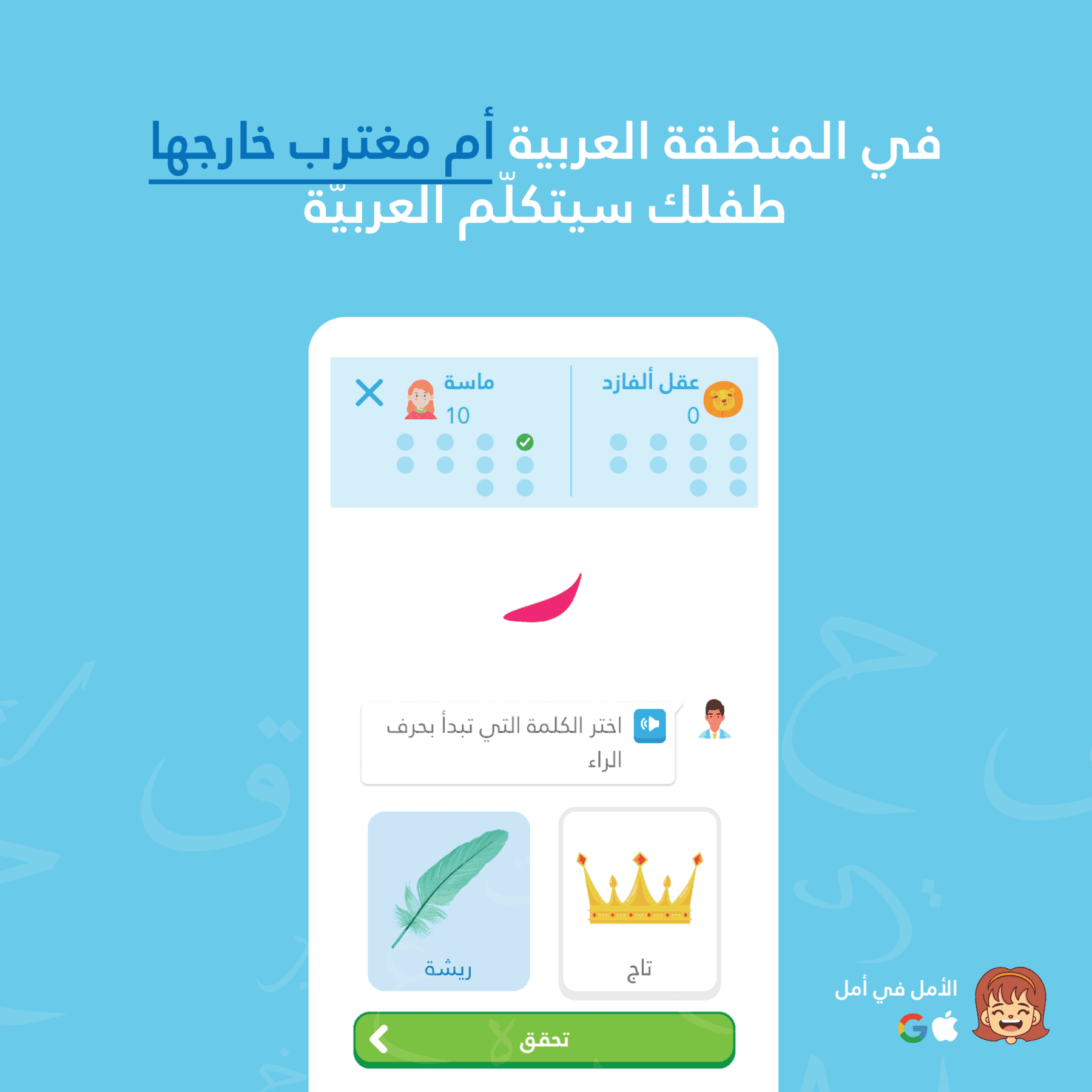
Bildschirmzeit bei Kleinkindern sollte begrenzt sein, aber wenn Sie sie nutzen, dann sinnvoll. Amal ist für junge Arabischlerner entwickelt und nutzt Spracherkennung, um Echtzeit-Aussprachefeedback zu geben – etwas, das Bücher nicht leisten können.
Für Kleinkinder gilt besonders:
- Sessions unter 10 Minuten halten
- Sitzen Sie mit Ihrem Kind zusammen und wiederholen Sie Wörter
- Nutzen Sie die App als Ergänzung zur realen arabischen Umgebung, nicht als Ersatz
Arabische Ausdrücke im Alltag
Führen Sie diese Ausdrücke in den täglichen Ablauf Ihres Kindes ein:
- Morgens: „صباح الخير“ (Guten Morgen)
- Beim Verlassen des Hauses: „يلا نروح“ (Los geht’s)
- Beim Nachhausekommen: „وصلنا“ (Wir sind da)
- Zur Schlafenszeit: „تصبح على خير“ (Gute Nacht)
- Nach dem Niesen: „يرحمك الله“ (Gesundheit)
Konsistenz ist wichtiger als Menge. Fünf Sätze, die täglich verwendet werden, fördern die neuronalen Verbindungen stärker als fünfzig Sätze, die nur einmal vorkommen.
Was Sie im jeweiligen Alter erwarten können
12-18 Monate: Ihr Kind versteht arabische Wörter, bevor es spricht. Es zeigt vielleicht auf Gegenstände, die Sie auf Arabisch benennen oder folgt einfachen Anweisungen wie „هات الكرة“ (bring den Ball).
18-24 Monate: Einzelne arabische Wörter erscheinen – meist Substantive wie „ماما“, „بابا“, „ماء“. Die Aussprache ist ungefähr, was normal ist.
24-36 Monate: Es entstehen Zwei-Wort-Phrasen auf Arabisch: „أريد ماء“ (Ich will Wasser), „بابا تعال“ (Papa komm). Der Wortschatz wächst schnell bei beständiger Anwendung.
FAQ
Ist es verwirrend für Kleinkinder, Arabisch und Englisch gleichzeitig zu lernen?
Nein. Studien zeigen, dass zweisprachige Kleinkinder keine Sprachverwirrung erleben. Sie können vorübergehend die Sprachen vermischen – sogenanntes Code-Switching – was ein Zeichen von kognitiver Flexibilität und nicht von Verwirrung ist. Mit 3-4 Jahren trennen zweisprachige Kinder ihre Sprachen natürlich.
Wie viele arabische Wörter sollte mein Kleinkind kennen?
Es gibt keine feste Zahl. Ein Kleinkind mit täglicher Arabisch-Exposition versteht meist 50-100 Worte mit 2 Jahren, spricht aber eventuell nur 10-20. Verstehen entwickelt sich vor Sprechen. Konzentrieren Sie sich eher auf die Menge der Exposition statt auf Wortzahlen.
Was, wenn ich selbst kein fließendes Arabisch spreche?
Sie können Ihrem Kleinkind trotzdem Arabisch bieten. Nutzen Sie Lieder, Hörbücher und Apps wie Amal mit muttersprachlicher Aussprache. Lernen Sie zusammen mit Ihrem Kind – Kleinkinder beurteilen Ihren Akzent nicht. Auch unperfekte Arabisch-Exposition ist viel wertvoller als keine.
Wann sollte ich eine App wie Amal mit meinem Kleinkind verwenden?
Amal ist für Kinder ab 3 Jahren konzipiert, aber Kleinkinder zwischen 2 und 3 Jahren können von betreuten Sitzungen profitieren, bei denen ein Elternteil die Nutzung begleitet. Für Kinder unter 2 sollten reale arabische Interaktionen wie Lieder, Bücher und Gespräche im Vordergrund stehen, nicht Bildschirmzeit.