Teach Arabic to Kids Living Abroad
Families living abroad can teach Arabic successfully by keeping the routine short, protecting daily exposure, and using one strong literacy tool instead of scattered resources.
How Can You Teach Arabic to Kids Living Abroad?
You can teach Arabic to kids living abroad by building a small daily routine around one clear goal: keeping Arabic active at home. Families in the diaspora usually do not fail because they do not care. They fail because Arabic becomes optional while school, English, and everything else stay mandatory. The fix is not a huge curriculum. The fix is a repeatable habit.
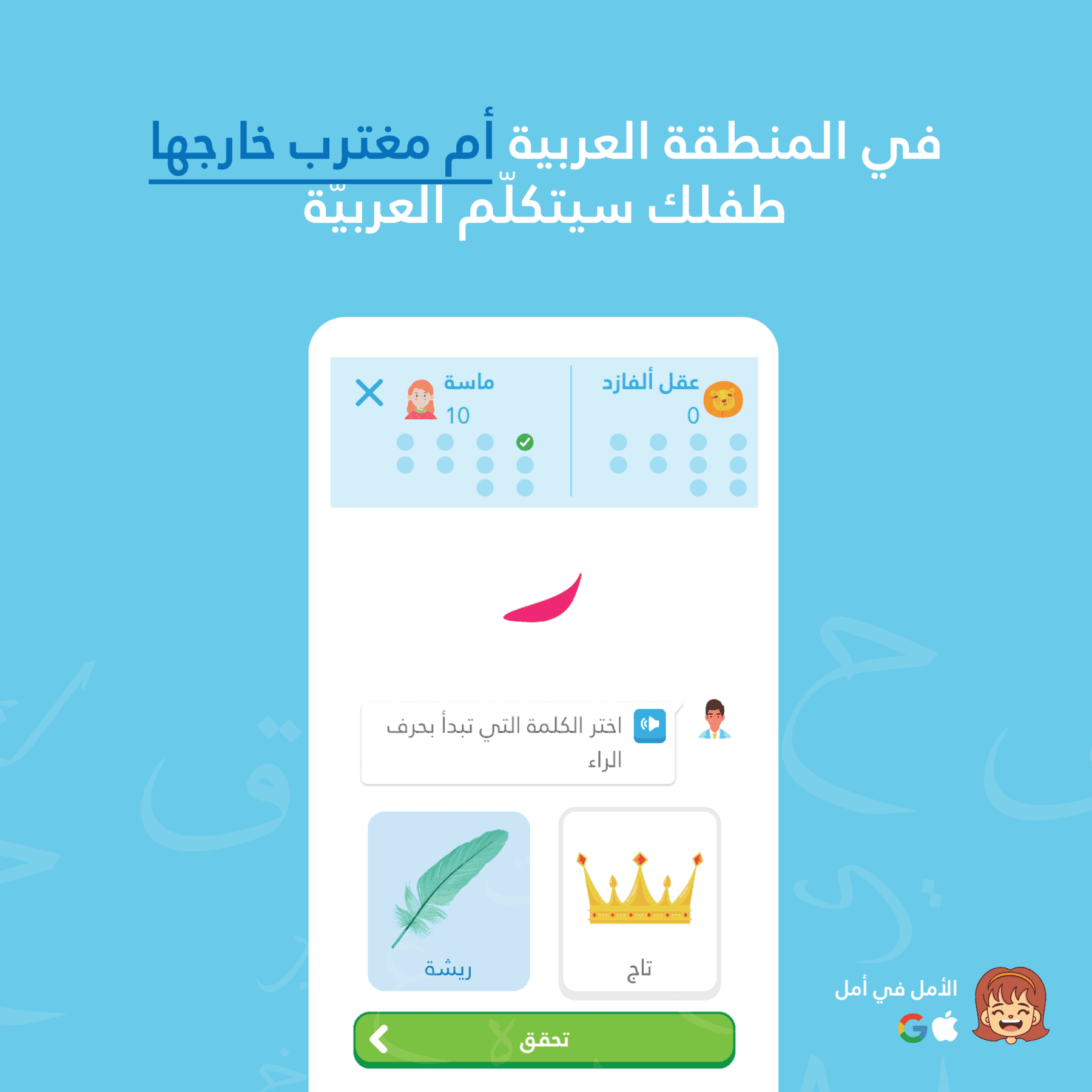
For many families, that means ten to fifteen minutes a day with Amal, plus small Arabic moments outside the app such as labeling objects, reading one short story, or replaying known vocabulary at dinner. Short daily exposure beats occasional long lessons every time.
What Makes Diaspora Arabic Hard?
The main challenge is environment. A child living abroad hears the dominant language everywhere and Arabic only in fragments. That means the home has to carry more of the Arabic load than parents first expect. Weekend school can help, but it rarely gives enough repetition by itself.
What Should Parents Focus On First?
Start with reading foundations, not perfection. Children need letters, sounds, simple words, and confidence before parents worry about advanced grammar. This is why Amal is a better first step than random worksheets or passive videos. It gives the family one literacy path that can be repeated even on busy days.
A Realistic Home Routine
Use one fixed time. Keep the session short. Review old material before adding new material. Let Arabic stay visible in the home through stories, labels, and conversation attempts. If the family also wants Quran recitation, add Thurayya later as a separate block instead of mixing everything into one long session.
Frequently Asked Questions
Can children become strong in Arabic while living abroad?
Yes, but only if Arabic is part of the weekly routine, not just a weekend-school subject.
Do parents need to speak Arabic fluently?
No. Parents need consistency, a good tool, and a home routine more than perfect fluency.
What should families read next?
Pair this with Arabic for Muslim Families in America and Arabic Curriculum for Kids at Home.