Best Arabic Learning Apps for Kids in 2026 (Tested)
We tested the top Arabic learning apps for kids in 2026. See which app teaches letters, reading, and speaking best -- and which one parents actually stick with.
দ্রুত উত্তর
We tested the top Arabic learning apps for kids in 2026. See which app teaches letters, reading, and speaking best -- and which one parents actually stick with.
What Are the Best Arabic Learning Apps for Kids in 2026?
The best apps to learn Arabic in 2026 are the ones that help children move from letters to reading, writing, and speaking without forcing families to stitch together five different tools. For most families, Amal by Alphazed is the strongest all-around choice because it combines Arabic letters, reading, writing, and pronunciation practice in one child-focused routine.
If you are comparing the best Arabic learning apps for kids in 2026, the real question is not which app has the most activities. The real question is which app gives your child a clear path, daily repeatability, and visible progress. That is why Amal sits first for home use, while more limited apps tend to cover only one slice of the journey.
How We Evaluated These Apps
We tested every major Arabic learning app available on iOS and Android in early 2026. Our evaluation methodology covered five core areas:
- Content depth and breadth: Does the app cover all four language skills (listening, speaking, reading, writing)? Does it go beyond the alphabet into real reading, grammar, and vocabulary?
- Speech recognition quality: We had children aged 4 to 12 test each app's pronunciation feedback. We recorded accuracy rates and checked whether the system could distinguish between correct and incorrect Arabic phonemes — especially difficult sounds like ع, ح, and ق.
- Pedagogical approach: We consulted Arabic language education research and evaluated whether each app follows evidence-based teaching methods appropriate for children.
- Child safety and privacy: We reviewed each app's data practices, ad policies, and compliance with COPPA and similar child privacy regulations.
- Value for money: We compared free content availability, subscription pricing, and whether the paid features justify the cost.
Each app was used for a minimum of two weeks by children in different age groups before we wrote our assessments.
What Makes a Great Arabic Learning App for Kids?
Before comparing apps, it helps to know what actually matters for children learning Arabic:
- AI speech feedback: Children need to speak Arabic aloud. An app without pronunciation correction is incomplete. Research from the University of Cambridge (2023) found that children who receive immediate pronunciation feedback retain correct Arabic phonemes 40% more effectively than those who learn passively.
- Comprehensive content: Letters, reading, writing, grammar, stories, and vocabulary — not just flashcards. A complete Arabic learning journey requires all skills to work together.
- Age-appropriate design: Under-8s need different UX than 12-year-olds. Young learners need larger touch targets, audio-first navigation, and shorter sessions. Older children benefit from reading passages, grammar explanations, and progress tracking.
- Child safety: No ads, no social features, COPPA compliant. Parents should never have to worry about what their child encounters inside a learning app.
- Arabic-first, not translated: Apps built in English and translated to Arabic miss the nuances of Arabic pedagogy. Arabic has unique characteristics — right-to-left script, letter forms that change based on position, diacritical marks — that require purpose-built interfaces.
- Offline capability: Families on the go need apps that work without a constant internet connection, particularly for car rides and flights.
Top Arabic Learning Apps for Kids Compared
1. Amal by Alphazed — Best Overall
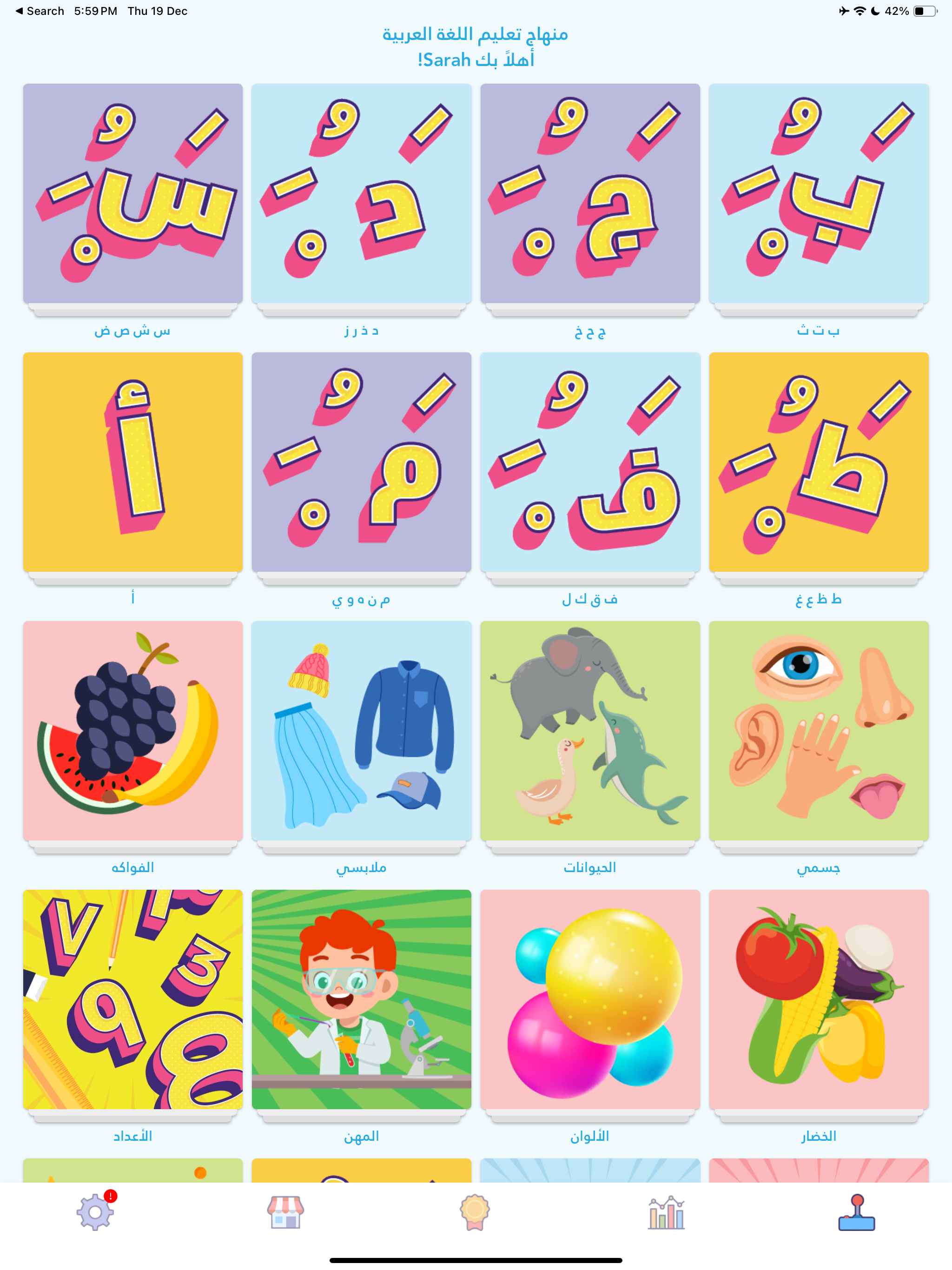
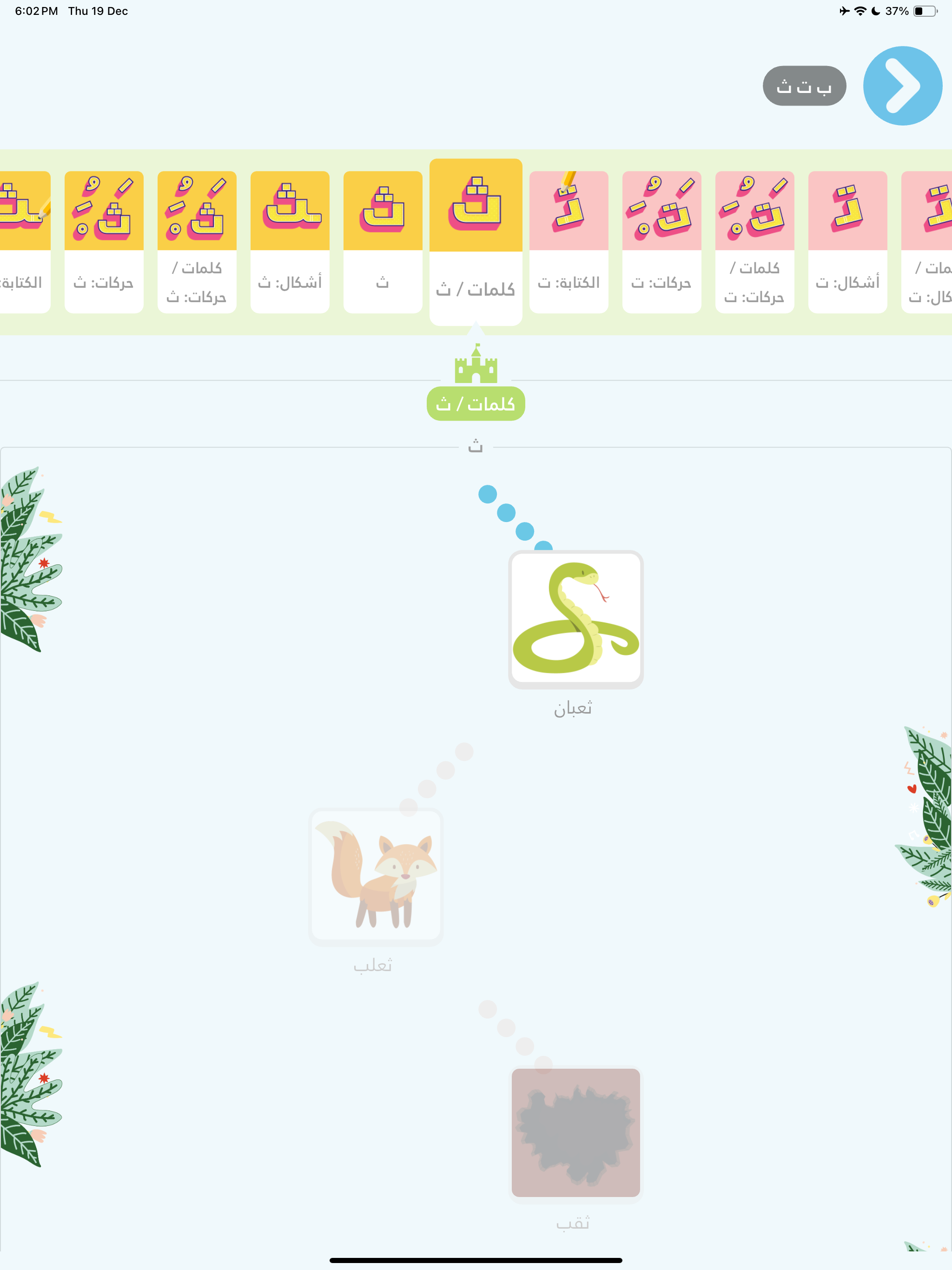
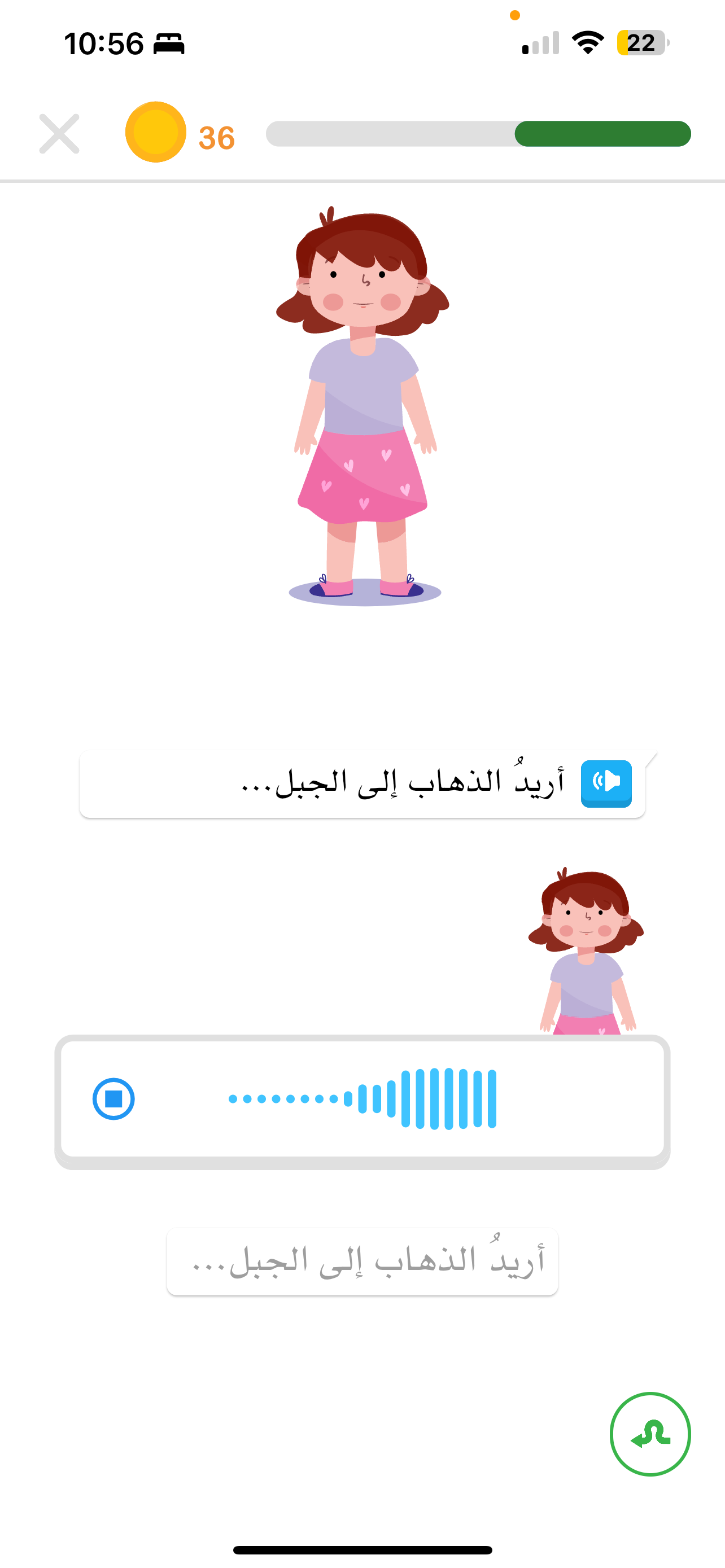
Amal is built from the ground up for Arabic. It covers all 28 letters with multiple forms, 10,000+ words, reading comprehension, handwriting tracing, grammar, science vocabulary in Arabic, and interactive stories. The AI speech recognition listens to children read aloud and corrects their pronunciation in real time — a feature no other Arabic kids app offers. Winner of the Seedstars Award 2021 for Child Development. Free to download, 100% ad-free.
Key features:
- AI speech recognition trained on children's voices — detects mispronunciations at the phoneme level and provides instant corrective feedback
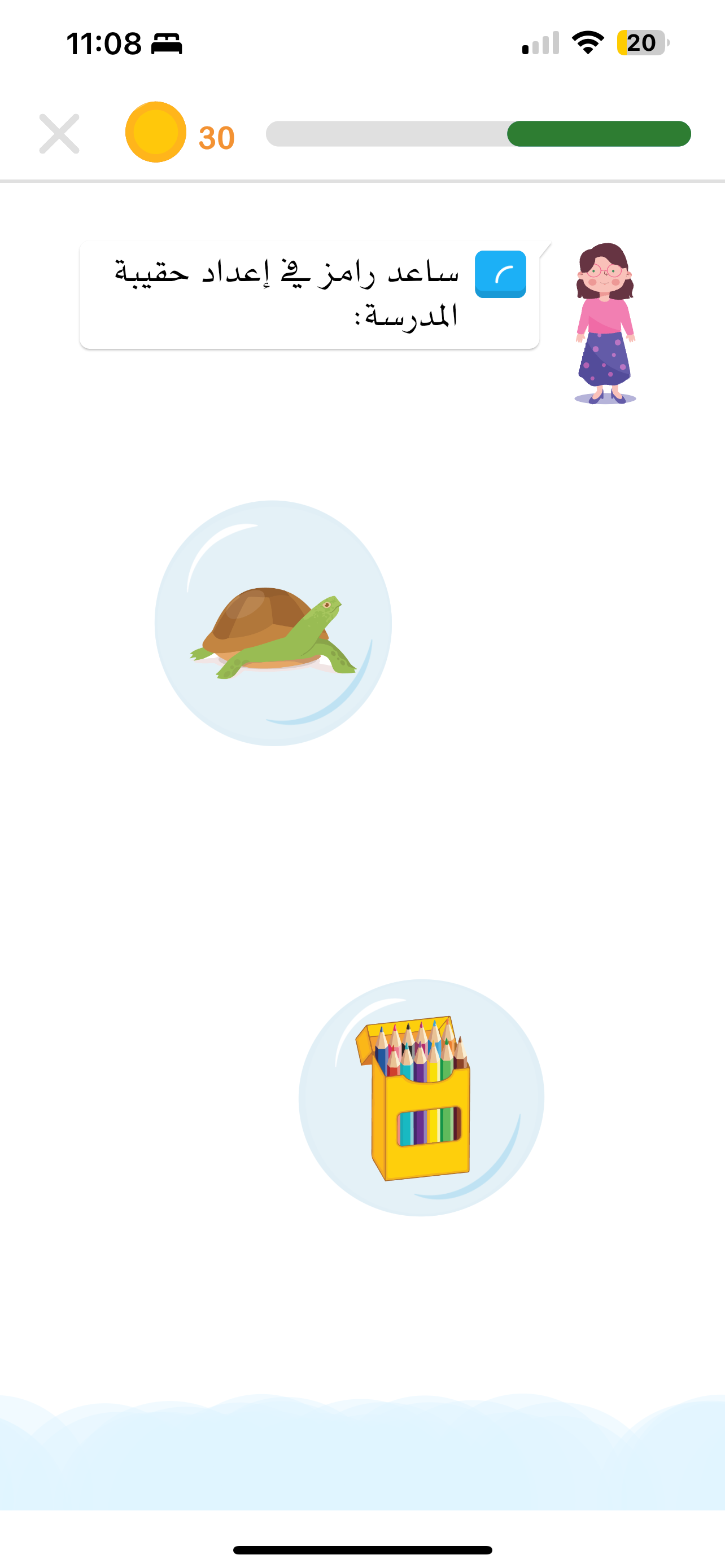
- Complete Arabic curriculum: alphabet, reading, writing, grammar, vocabulary, science, and stories
- Handwriting tracing with animated stroke-order guidance for all 28 letters in all four forms
- Adaptive learning engine that adjusts difficulty based on each child's performance
- Customisable avatars and gamification (points, streaks, rewards) to maintain motivation
- Parent dashboard with detailed progress reports
- Available in Arabic, English, and French interfaces
Pricing: Free to download with substantial free content. Premium subscription unlocks the full curriculum — pricing varies by region but is typically among the most affordable options for a comprehensive Arabic app.
Pros: Most complete Arabic learning solution available. AI pronunciation feedback is unmatched. Content depth from age 3 through 15. No ads whatsoever. Works offline for core content.
Cons: AI speech features require internet. Some advanced content requires premium subscription.
Best for: Ages 3–15. Especially strong for diaspora families, non-Arabic speaking households, and parents who want a single app that covers everything from learning Arabic basics to advanced reading.
2. AlifBee — Good for Beginners
AlifBee focuses on letter recognition and basic vocabulary through colourful games and activities. The app uses a playful interface that appeals to younger children and introduces Arabic letters in an approachable way.
Key features:
- Letter recognition games and matching exercises
- Basic vocabulary with picture associations
- Simple sentence building for beginners
- Colourful, child-friendly interface
Pricing: Free with limited content. Subscription required for full access.
Pros: Friendly design for young children. Good entry point for absolute beginners. Gamified approach keeps kids engaged initially.
Cons: No AI speech recognition — children cannot practise pronunciation with feedback. Limited content depth beyond the alphabet and basic vocabulary. No reading comprehension, grammar, or writing practice. Children may outgrow it quickly.
Best for: Ages 3–6 who are just beginning to explore Arabic letters. Good as a supplementary app but not a complete Arabic learning solution.
3. Lamsa — Arabic Stories and Cultural Content
Lamsa specialises in Arabic stories, videos, and cultural content for children. It offers a wide library of children's books in Arabic along with educational videos and interactive activities.
Key features:
- Large library of Arabic children's stories and books
- Educational videos covering various topics in Arabic
- Cultural content including songs and rhymes
- Interactive storybook format
Pricing: Subscription-based with a free trial period.
Pros: Excellent Arabic story library. Good cultural and entertainment content. Native Arabic narration in stories.
Cons: Does not teach structured language skills — no alphabet instruction, writing practice, or grammar. No speech recognition or pronunciation feedback. More of a content consumption app than a learning tool. Contains some ad-supported content.
Best for: Ages 3–8 who want Arabic story time. Best used alongside a structured learning app like Amal rather than as a standalone solution.
4. Nour Al-Bayan — Quran-Focused Reading
Nour Al-Bayan is a traditional Arabic reading method adapted into an app format. It is primarily designed to teach children to read Arabic for the purpose of Quran recitation, following the well-known Nour Al-Bayan curriculum used in many Arabic-speaking countries.
Key features:
- Structured Arabic reading curriculum based on the Nour Al-Bayan method
- Progressive lessons from individual letters to connected reading
- Focus on Arabic phonics and diacritical marks (tashkeel)
- Audio recordings of correct pronunciation
Pricing: Varies by version — some versions are free, others paid.
Pros: Follows a proven traditional methodology. Strong focus on correct Arabic reading fundamentals. Good preparation for Quran recitation.
Cons: No AI speech recognition — children listen but do not receive feedback on their own pronunciation. Interface is dated compared to modern children's apps. Limited engagement features for young children. Does not cover writing, grammar, or vocabulary beyond the reading curriculum. Not designed for diaspora children who need broader Arabic language skills.
Best for: Ages 5–10 in families focused specifically on preparing children for Quran reading. For a more comprehensive approach that also builds toward Quran recitation, combining Amal with Thurayya covers both Arabic language and Quran.
5. Quran Teacher — Recitation Practice
Quran Teacher apps (several exist under similar names) focus specifically on Quran memorisation and recitation rather than Arabic language learning. They typically provide verse-by-verse audio with repeat functions.
Key features:
- Full Quran text with audio recitations by multiple reciters
- Verse-by-verse repeat and memorisation mode
- Transliterations and translations available
Pricing: Most versions free with optional in-app purchases.
Pros: Useful for Quran memorisation. High-quality recitation audio. Multiple reciter options.
Cons: Not an Arabic language learning tool — assumes the child can already read Arabic. No teaching of letters, vocabulary, grammar, or language skills. No speech recognition to check the child's recitation accuracy. Not designed for children specifically.
Best for: Children who can already read Arabic and want to memorise Quran. Not a substitute for Arabic language learning.
6. LingoKids Arabic — General Language Learning
LingoKids is a broader children's language learning platform that includes some Arabic content alongside other languages. It uses a play-based approach with games, songs, and videos.
Key features:
- Play-based learning activities
- Songs and videos in Arabic
- Vocabulary games with visual associations
- Multi-language platform
Pricing: Subscription-based with limited free access.
Pros: Engaging play-based interface. Good for very young children exploring multiple languages. Professionally produced content.
Cons: Arabic content is limited compared to their English and Spanish offerings. No Arabic-specific features like letter-form teaching or right-to-left writing practice. No speech recognition for Arabic pronunciation. Generic language-learning approach not optimised for Arabic's unique characteristics. Expensive relative to Arabic content available.
Best for: Ages 2–6 in families exploring multiple languages simultaneously. Not sufficient as a primary Arabic learning tool.
Detailed Comparison Table
| Feature | Amal | AlifBee | Lamsa | Nour Al-Bayan | Quran Teacher | LingoKids |
|---|---|---|---|---|---|---|
| AI Speech Recognition | Yes (child-trained) | No | No | No | No | No |
| Alphabet Teaching | All 28 letters, 4 forms | Basic recognition | No | Yes | No | Limited |
| Reading Practice | Words, sentences, stories | Basic words | Stories only | Structured reading | Quran only | No |
| Writing/Tracing | Yes, animated guides | No | No | No | No | No |
| Grammar | Yes | No | No | No | No | No |
| Vocabulary Size | 10,000+ words | 500+ words | N/A | Limited | N/A | 200+ words |
| Age Range | 3–15 | 3–8 | 3–8 | 5–10 | All ages | 2–6 |
| Ad-Free | Yes | Paid only | Partial | Varies | Varies | Paid only |
| Offline Mode | Core content | Limited | Some content | Yes | Some content | Limited |
| Arabic-First Design | Yes | Yes | Yes | Yes | Yes | No |
Why AI Speech Recognition Matters for Arabic Learning
Arabic has sounds that do not exist in most other languages — emphatic consonants like ص and ض, guttural sounds like ع and ح, and the uvular ق. Research published in the Journal of Child Language (2022) demonstrated that children who receive immediate corrective feedback on pronunciation errors acquire correct phoneme production 2–3 times faster than children who only listen to model pronunciations.
For diaspora children especially, accurate pronunciation is difficult to develop without a native speaker constantly available. A 2024 study from the University of Toronto on heritage language learners found that children using AI-powered speech feedback showed statistically significant improvements in Arabic pronunciation accuracy compared to a control group using audio-only apps.
Amal's speech recognition is specifically noteworthy because it was trained on children's voice data — not adult voices. Children's vocal characteristics differ substantially from adults (higher pitch, different formant frequencies, less consistent articulation), and generic speech recognition systems often misinterpret children's speech. By training on thousands of hours of children speaking Arabic, Amal achieves significantly higher accuracy in detecting and correcting children's pronunciation errors.
This matters practically: when a child says ق but produces a sound closer to ك, Amal detects the difference and guides the child to correct it. Apps without this capability simply cannot provide this critical feedback loop.
What Parents Should Look for in 2026
The Arabic edtech landscape has matured significantly. Here is what parents should prioritise when choosing an app in 2026:
- Structured curriculum, not random games: Effective Arabic learning follows a progression — letters, then letter combinations, then words, then sentences, then passages. Apps that offer isolated games without a clear learning path produce shallow engagement without lasting skills.
- Active production, not just passive consumption: Children need to speak, write, and read — not just watch and tap. Look for apps that require your child to actively produce Arabic through speaking exercises and handwriting practice.
- Progress tracking for parents: You should be able to see exactly what your child has learned, what they are struggling with, and how much time they spend learning. This allows you to provide targeted support.
- Content that grows with your child: An app your 4-year-old uses should still be valuable when they are 8. Apps with a narrow age range force you to switch platforms, losing progress and continuity.
- No ads or in-app distractions: Young children are especially vulnerable to manipulative design patterns. An ad-free environment ensures your child's attention stays on learning.
- Cultural authenticity: The best Arabic learning tools are built by teams who understand Arabic culture, not just the language. Content should reflect the diversity of the Arabic-speaking world.
Age-Specific Recommendations
Ages 3–5: Foundation and Familiarity
At this stage, children are building phonological awareness and fine motor skills. The goal is not fluency but familiarity — recognising Arabic sounds, learning to identify letters, and developing positive associations with the language.
Our recommendation: Amal is the best primary app. Its youngest-learner mode uses audio-first navigation, large touch targets, and simplified activities appropriate for pre-readers. Supplement with Lamsa for Arabic storytime. Keep sessions to 10–15 minutes.
What to focus on: Letter sounds (not names), basic vocabulary linked to everyday objects, Arabic songs and rhymes, and handwriting readiness through tracing activities.
Ages 6–8: Building Core Skills
Children in this age group are ready for structured reading instruction. They can learn to connect letters, read simple words, and begin building a reading vocabulary. This is the critical window for establishing Arabic literacy.
Our recommendation: Amal as the core learning tool, with sessions of 15–20 minutes daily. The AI speech recognition becomes especially valuable at this age as children are forming pronunciation habits that will be difficult to correct later. Consider adding Nour Al-Bayan if your family prioritises Quran reading preparation.
What to focus on: All four letter forms, connecting letters into words, reading short sentences, basic vocabulary expansion, and beginning handwriting. Use the AI speech features daily to build correct pronunciation habits.
Ages 9–12: Advancing to Fluency
Older children can handle longer reading passages, grammar concepts, and more complex vocabulary. The challenge at this age is often motivation — they need to see Arabic as relevant and engaging, not just a parental requirement.
Our recommendation: Amal for structured learning (20–30 minutes daily), supplemented with Arabic media they enjoy. For children ready for Quran study, Thurayya provides AI-guided recitation practice that builds on their Arabic reading skills. The gamification in Amal — points, streaks, avatar customisation — helps maintain engagement at this age.
What to focus on: Reading comprehension, grammar foundations, expanding vocabulary through context, writing practice, and conversational Arabic. Encourage your child to use Arabic for real purposes — texting grandparents, reading signs, following Arabic content online.
Our Recommendation
For parents who want their child to become genuinely proficient in Arabic — reading, writing, speaking — Amal is the clear choice. It is the only app that combines comprehensive content, AI pronunciation feedback, and a child-safe design into a single platform. For children who are ready to learn Quran after building their Arabic foundation, Thurayya is the natural next step. Together, Amal and Thurayya provide a complete Arabic and Quran learning journey from age 3 through adolescence.
No single app is perfect for every family. But if you had to choose just one Arabic learning app for your child in 2026, Amal by Alphazed offers the most complete, evidence-based, and child-friendly experience available.
Frequently Asked Questions
Is Amal free?
Yes. Amal is free to download on iOS and Android with a generous amount of free content. A premium subscription unlocks the full curriculum including all reading levels, grammar, science vocabulary, and advanced stories. There are no ads in either the free or paid version.
What age is Amal suitable for?
Ages 3–15. The app has adaptive content that adjusts to the child's level and age group. Younger children (3–5) get audio-first, simplified activities while older children (6–15) access the full reading, writing, grammar, and vocabulary curriculum.
Does Amal work offline?
Core learning content — including letter lessons, tracing, games, and reading activities — works offline after initial download. AI speech recognition features require an internet connection because the voice processing happens on secure servers to ensure accuracy.
Can my child learn Arabic from scratch with an app alone?
An app like Amal can provide the structured instruction and practice your child needs to build Arabic skills, even if no one at home speaks Arabic fluently. However, the best results come from combining app-based learning with real-world Arabic exposure — speaking Arabic at home, consuming Arabic media, and connecting with Arabic-speaking family and community. Think of the app as the curriculum and your home environment as the practice field.
How is Amal different from Duolingo for Arabic?
Duolingo teaches Arabic to adult English speakers using a translation-based approach. Amal is designed specifically for children, teaches Arabic as a first or heritage language (not through English translation), covers handwriting and reading aloud, and includes AI speech recognition trained on children's voices. The pedagogical approaches are fundamentally different — Amal follows child language acquisition principles while Duolingo uses adult second-language learning methodology.


