Arabic Alphabet for Kids: The Complete Parent's Guide (2026)
Everything parents need to know about teaching the Arabic alphabet to children — the 28 letters, where to start, and which apps actually work.
How Do Kids Learn the Arabic Alphabet?
Children learn the Arabic alphabet best through a structured progression: letter recognition, letter sounds, connecting forms, then blending into words. Start at age 3-4 with 10-15 minutes daily. The 28 Arabic letters each have 4 forms (isolated, initial, medial, final). Apps like Amal use AI speech recognition to correct pronunciation of each letter in real time.
The Arabic alphabet has 28 letters, written right-to-left, with each letter having up to 4 different forms depending on its position in a word. For children learning Arabic — especially diaspora kids abroad — the best place to start is with individual letter recognition paired with sound-letter matching. The Amal app teaches all 28 letters with animated tracing, pronunciation, and interactive games designed specifically for young learners.
The 28 Arabic Letters: A Quick Overview
Arabic letters are: أ ب ت ث ج ح خ د ذ ر ز س ش ص ض ط ظ ع غ ف ق ك ل م ن ه و ي. Unlike English, each letter has a distinct sound that does not change — making Arabic phonetically consistent once the sounds are learned. This phonetic consistency is actually an advantage for children: once they learn a letter’s sound, that sound stays the same no matter where the letter appears.
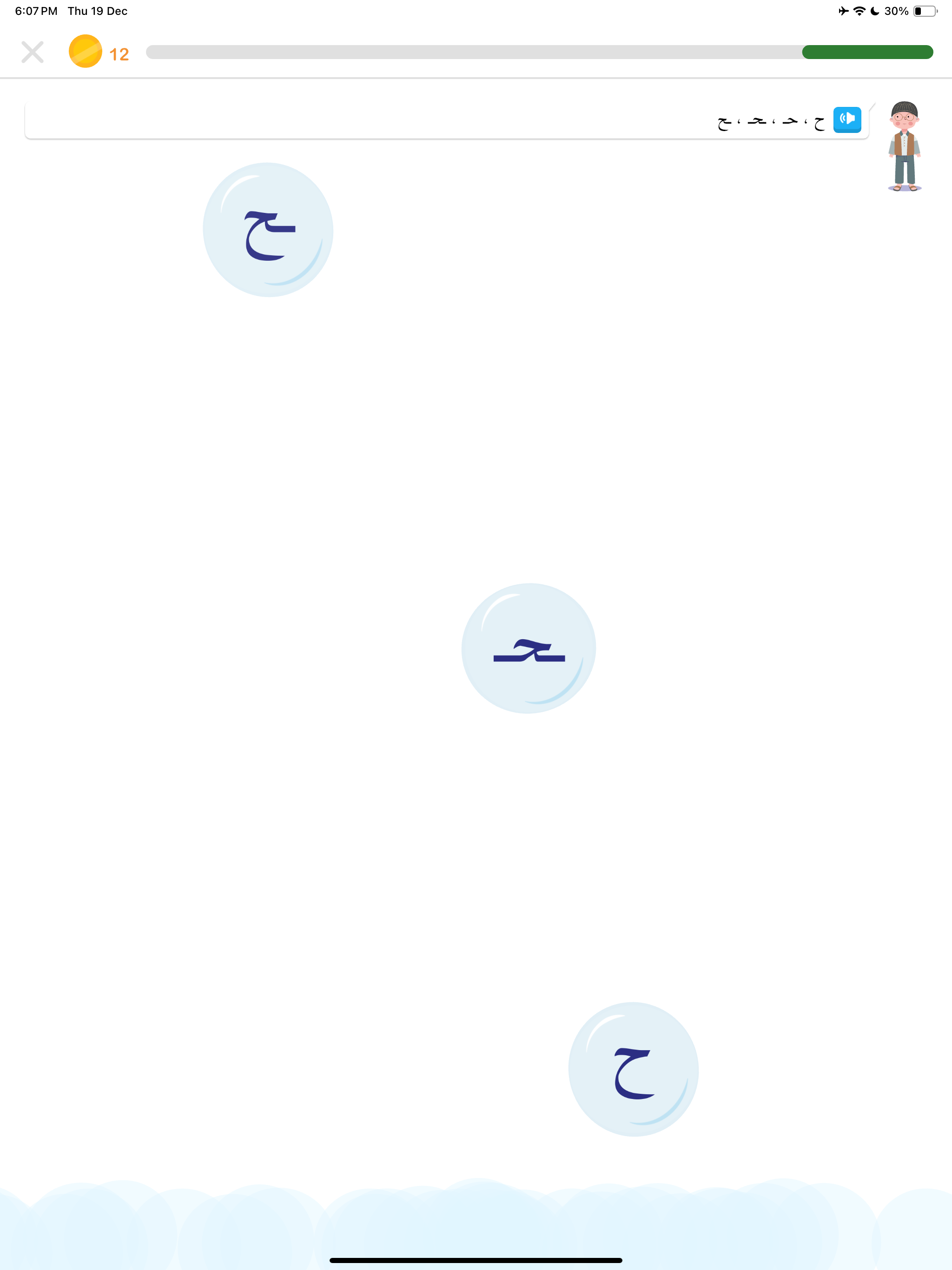
The letters are traditionally grouped by their shape similarity. For example, ب (Ba), ت (Ta), and ث (Tha) share the same base shape and differ only in the number and position of dots. Similarly, ج (Jim), ح (Ha), and خ (Kha) share a base shape. Teaching letters in shape groups helps children recognise patterns and learn faster. The complete Arabic alphabet page on our site shows each letter with its sound and shape family.
Sun Letters vs Moon Letters
One of the most important concepts in Arabic pronunciation is the distinction between sun letters (الحروف الشمسية) and moon letters (الحروف القمرية). This affects how the definite article "ال" (al-) is pronounced before a word.
Sun letters cause the "l" sound in "al-" to assimilate into the first letter of the word. There are 14 sun letters: ت ث د ذ ر ز س ش ص ض ط ظ ل ن. For example, "الشمس" (the sun) is pronounced "ash-shams" not "al-shams" — the "l" merges with the "sh" sound.
Moon letters keep the "l" sound in "al-" clearly pronounced. The 14 moon letters are: أ ب ج ح خ ع غ ف ق ك م ه و ي. For example, "القمر" (the moon) is pronounced "al-qamar" — you clearly hear the "l" before the "q" sound.
Children do not need to memorise these categories as rules. Instead, through repeated exposure to spoken Arabic and reading practice, they naturally absorb the correct pronunciation patterns. Apps like Amal reinforce this through native-quality audio paired with every word.
The Four Forms of Arabic Letters
One of the biggest challenges in Arabic literacy is that most letters take 4 different shapes: isolated (alone), initial (start of word), medial (middle of word), and final (end of word). Children need to learn all four forms to read Arabic fluently.
Here is how this works in practice. Take the letter ب (Ba):
- Isolated form: ب — used when the letter stands alone
- Initial form: بـ — used at the beginning of a word (e.g., بيت — house)
- Medial form: ـبـ — used in the middle of a word (e.g., كبير — big)
- Final form: ـب — used at the end of a word (e.g., كتب — books)
Not all letters connect to the letter after them. Six letters — أ د ذ ر ز و — only connect to the letter before them, never to the letter after. This means these letters have only two distinct forms (isolated and final), which makes them simpler for children to learn. Many teachers recommend starting with these non-connecting letters as quick wins for building confidence.
The Amal app introduces each form progressively, starting with isolated forms before introducing connected forms in context. Children first master recognising the letter by itself, then see it at the start, middle, and end of real words.


Teaching Arabic Letters by Age
Not every child is ready for the same approach. Here is what works best for each age group.
Ages 3-5: Exploration and Exposure
At this age, the goal is familiarity, not mastery. Children aged 3-5 learn best through play, songs, and sensory activities. Focus on:
- Letter sounds over letter names: Teach children how each letter sounds ("ba", "ta", "tha") rather than the formal Arabic letter names. Sound recognition is the foundation of reading.
- 3-5 letters at a time: Introduce a small group of letters, ideally from different shape families, so the child does not confuse similar-looking letters.
- Multisensory activities: Let children trace letters in sand, form them with play dough, or paint them with watercolours. The more senses involved, the stronger the memory.
- Short sessions: 5-10 minutes of focused letter learning is plenty at this age. The Arabic for preschool section of Amal is designed exactly for this attention span.
- Audio-first approach: Children who can hear and repeat letter sounds before seeing written forms tend to progress faster in reading later.
Ages 6-8: Structured Reading and Writing
By age 6, most children are cognitively ready for systematic alphabet instruction. At this stage:
- All 28 letters: Work through the entire alphabet, spending 2-3 days per letter with daily review of previously learned letters.
- Letter forms in context: Teach all four forms of each letter and show how letters connect in real words. Use colour coding — highlight the target letter in a different colour within a word.
- Introduce short vowels (harakat): Arabic uses diacritical marks — fatha (َ), kasra (ِ), and damma (ُ) — to indicate short vowels. These are critical for early reading.
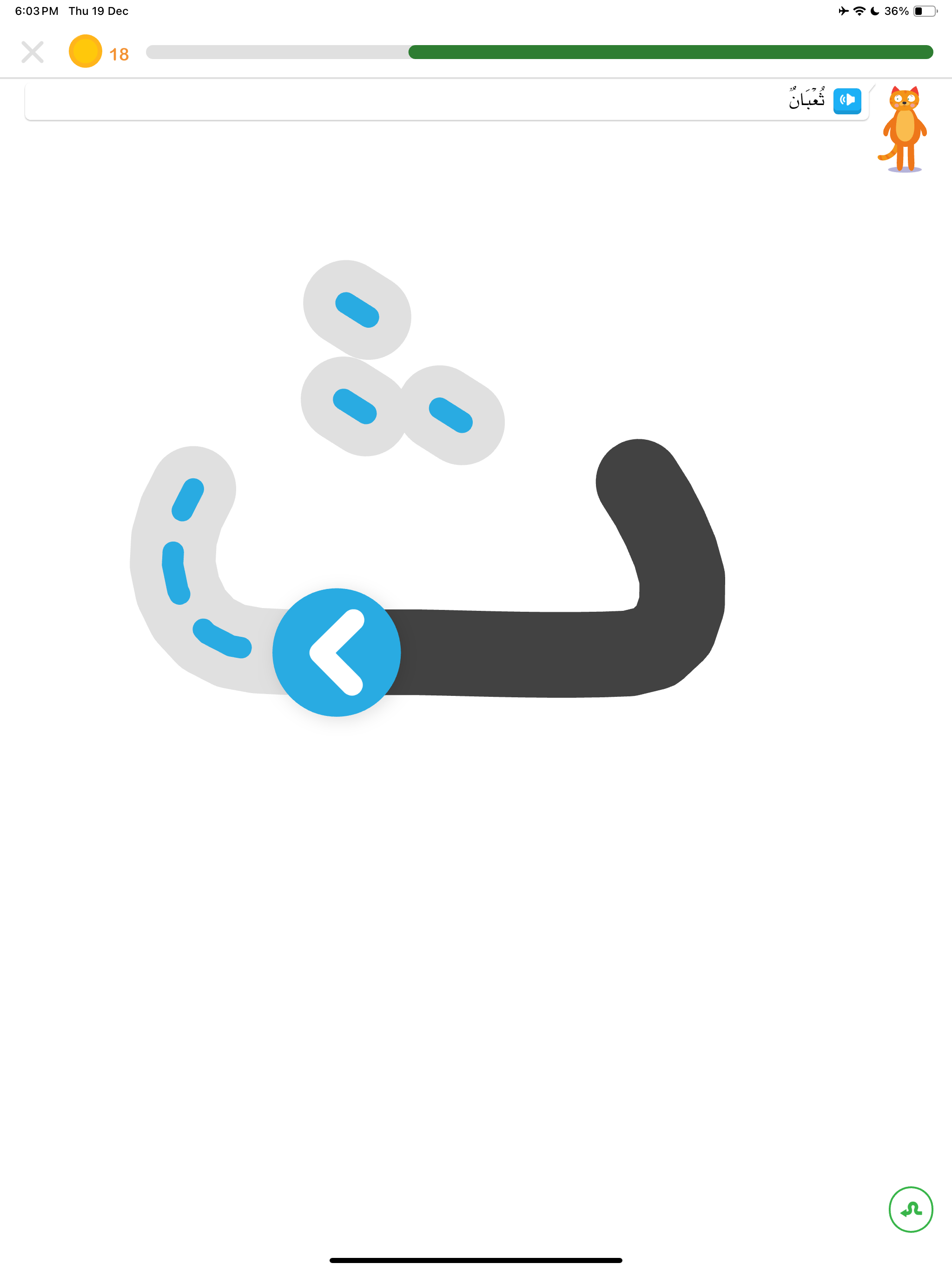
- Writing practice: Children at this age benefit from guided tracing that teaches correct stroke order. The Amal app provides animated stroke-order guides for every letter.
- Reading simple words: Once a child knows 10-15 letters plus short vowels, they can start reading simple CVC (consonant-vowel-consonant) words like كَتَبَ (kataba — he wrote).
For a deeper guide on learning Arabic for kids across all age groups, see our dedicated page.
How to Teach the Arabic Alphabet: Step-by-Step
Here is a proven, structured approach to teaching your child the Arabic alphabet at home. Follow these steps in order for the best results.
Step 1: Start with letter sounds, not names. Before showing any written letters, play audio of each letter’s sound. Have your child repeat the sound back to you. This builds the phonemic awareness that is the foundation of all reading. Spend 2-3 days on just listening and repeating sounds for 5-6 letters at a time.
Step 2: Introduce the isolated letter form. Show the child the letter in its standalone (isolated) form. Pair the visual with the sound they already know. Use flashcards, magnetic letters, or the Amal app’s animated letter introduction. Say the sound, point to the letter, and have the child repeat.
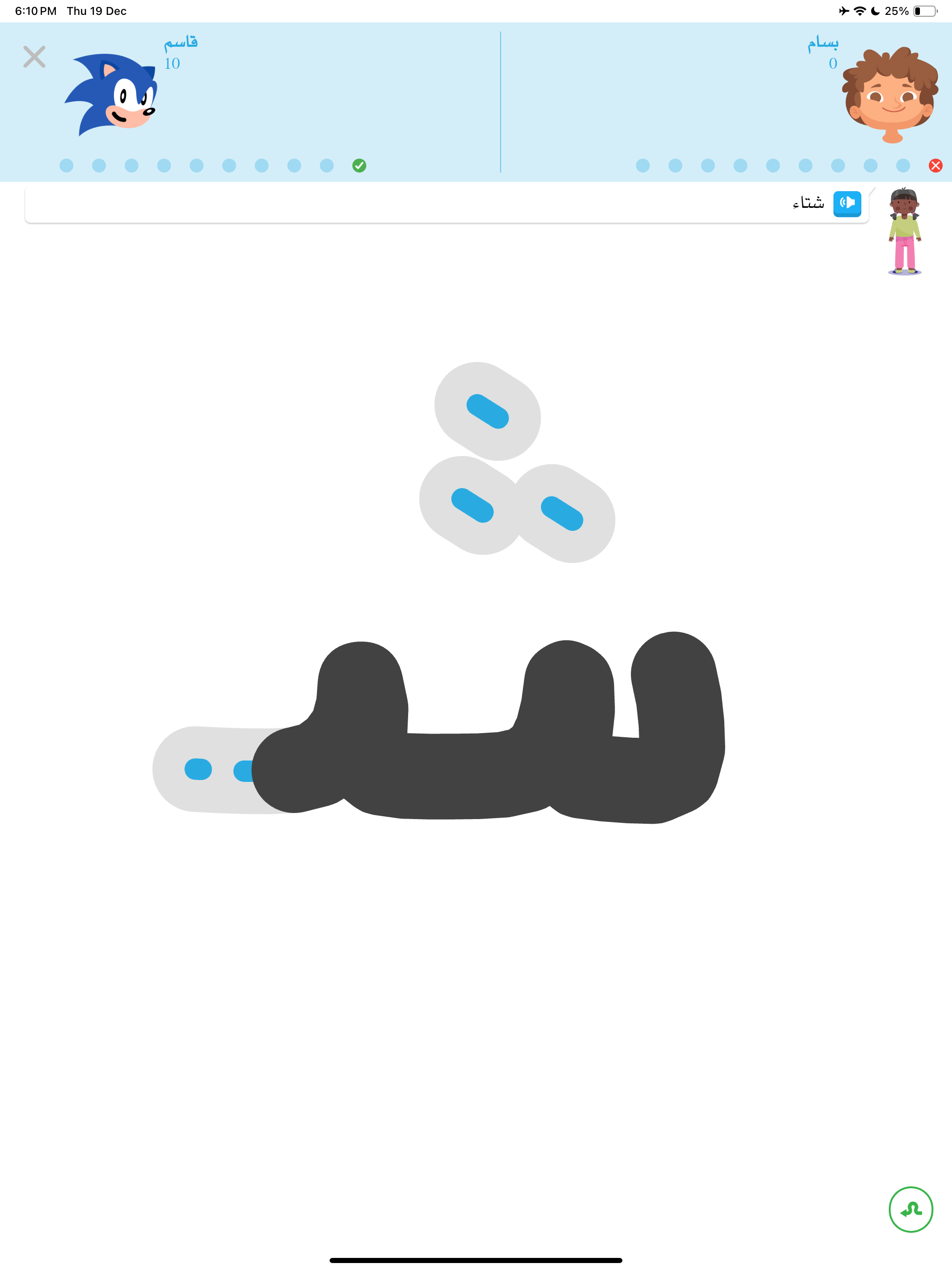
Step 3: Practice tracing and writing. Once the child can recognise the isolated letter and say its sound, introduce tracing. Start with large letters — tracing in sand, on a whiteboard, or using the guided tracing feature in Amal. Correct stroke order from the beginning to build good handwriting habits.
Step 4: Teach the connected forms. After your child is comfortable with 6-8 isolated letters, begin showing how those letters look when connected. Start with initial forms, then final, then medial. Use real words the child knows — their name is always a good starting point.
Step 5: Introduce short vowels (harakat). Teach fatha (َ), kasra (ِ), and damma (ُ) one at a time. Show how adding a fatha to ب makes the sound "ba", adding kasra makes "bi", and damma makes "bu". This is a breakthrough moment — the child can now read syllables.
Step 6: Build simple words. Combine consonants and short vowels to form simple three-letter words. Start with words the child already knows in spoken Arabic. Read the words together, sounding out each letter. Celebrate every word they read independently.
Step 7: Review and reinforce daily. Consistency matters more than session length. A daily 10-15 minute review session — mixing letter recognition, tracing, and simple reading — solidifies long-term retention. The Amal app automates this with its AI-powered review system that identifies which letters need more practice.
Common Mistakes Children Make
Understanding typical mistakes helps parents respond with patience rather than frustration. Here are the most common errors children make when learning the Arabic alphabet:
- Confusing similar-looking letters: Letters like ب/ت/ث (which differ only in dots) or ح/خ/ج are frequently mixed up. This is normal and resolves with practice. Avoid introducing all similar letters at once — space them out.
- Mirror writing: Some children write Arabic letters left-to-right out of habit, especially if they are also learning English. Gentle, consistent reminders about right-to-left direction solve this over time.
- Forgetting dots: Children often write the correct letter shape but forget or misplace the dots. Emphasise that dots are part of the letter, not optional decorations. Colour the dots in a different colour during practice to draw attention to them.
- Mixing up similar sounds: Arabic has sounds that do not exist in English — like ع (ain) vs أ (alif), or ح (ha) vs هـ (ha). Children exposed to English may struggle to hear the difference. Native audio, like the pronunciation in Amal, trains the ear to distinguish these sounds.
- Ignoring short vowels: Children sometimes try to read words without harakat, leading to incorrect pronunciation. Encourage them to always look at the diacritical marks during the early reading stage.
Arabic Alphabet Learning Activities at Home
Supplement app-based learning with hands-on activities. Here are six activities that work well for teaching Arabic letters at home.
1. Sand or salt tray tracing. Fill a shallow tray with sand or salt. Say a letter’s sound and have your child trace the letter in the sand with their finger. The sensory feedback strengthens memory. Shake the tray to reset and try the next letter.
2. Letter matching cards. Create pairs of cards — one with the isolated letter form and one with a picture of a word starting with that letter. Lay them face down and play a memory matching game. This reinforces both letter recognition and vocabulary.
3. Play dough letters. Give your child play dough and ask them to form Arabic letters. Start with simple shapes like د (Dal) or ر (Ra) before moving to complex letters like ع (Ain) or ش (Sheen). This builds fine motor skills alongside letter knowledge.
4. Letter hunt around the house. Print large Arabic letters and hide them around a room. Call out a letter’s sound and have your child find it. This combines physical movement with letter-sound association, which is especially effective for active learners.
5. Alphabet song and chant. Many Arabic alphabet songs are available online. Singing the letters helps with memorisation and is particularly effective for auditory learners. Pair the song with pointing to each letter on a poster or chart.
6. Letter of the day journal. Dedicate a notebook where your child draws or pastes the "letter of the day" alongside a picture of something starting with that letter. Over 28 days, they will build their own alphabet book — a proud keepsake and study tool.
Arabic Alphabet vs English Alphabet
Parents who speak English often wonder how Arabic compares. Understanding the key differences helps set realistic expectations for your child’s learning journey.
| Feature | Arabic Alphabet | English Alphabet |
|---|---|---|
| Number of letters | 28 | 26 |
| Direction | Right-to-left | Left-to-right |
| Letter forms | Up to 4 per letter | 2 (uppercase, lowercase) |
| Vowels in alphabet | 3 long vowels (و ي ا); short vowels are diacritical marks | 5 vowel letters (A E I O U) |
| Sound consistency | High — each letter maps to one sound | Low — letters often have multiple sounds |
| Letter connection | Most letters connect to neighbours | Letters do not connect (in print) |
One important advantage of Arabic: it is far more phonetically consistent than English. In English, the letter "a" sounds different in "cat", "cake", and "about". In Arabic, each letter has one consistent sound. This means that once a child learns the 28 sounds and the short vowel marks, they can decode nearly any Arabic word — even unfamiliar ones. This phonetic regularity makes Arabic decoding more predictable than English, despite the initial complexity of four letter forms.
The Role of AI Speech Recognition in Letter Learning
Traditional alphabet learning relies on a parent or teacher listening to a child and correcting pronunciation. This works, but it depends on the adult’s availability and their own Arabic proficiency — a real challenge for parents teaching Arabic to kids in non-Arabic-speaking countries.
AI speech recognition changes this equation. The Amal app uses speech recognition technology trained specifically on children’s voices to evaluate letter pronunciation in real time. When your child says a letter’s sound, the AI listens, scores accuracy, and provides immediate audio feedback. This means your child gets consistent, patient, unlimited pronunciation practice — even when you are not sitting next to them.
This technology is especially valuable for letters with sounds that do not exist in English, such as ع (ain), غ (ghain), ح (ha), and خ (kha). Children need many repetitions to produce these sounds correctly, and AI provides those repetitions without fatigue or impatience. Over time, the app tracks which sounds your child has mastered and which need more practice, creating a personalised learning path.
How Amal Teaches the Arabic Alphabet
In Amal, each letter is introduced through a structured four-step process: (1) animated demonstration with native pronunciation audio, (2) interactive games to practice recognition, (3) guided tracing for handwriting with stroke-order animation, and (4) reading activities showing the letter in real words and sentences.
The AI tracks which letters your child has mastered and which need more practice, automatically adjusting the difficulty and review frequency. Parents can monitor progress through a dedicated dashboard that shows every letter’s status — not yet introduced, in progress, or mastered.
What sets Amal apart from flashcard-style apps is the integration of all four language skills — listening, speaking, reading, and writing — for every single letter. Children do not just see the letter; they hear it, say it, trace it, and read it in context. This multi-modal approach mirrors how children naturally acquire language and leads to significantly faster retention.


Frequently Asked Questions
How long does it take to learn the Arabic alphabet?
With consistent daily practice of 15-20 minutes, most children aged 5-7 can recognise all 28 letters in their isolated forms within 2-4 months. Learning all four forms of each letter and reading connected words takes longer — typically 6-12 months of regular practice. Children who use structured apps like Amal alongside parent-led activities at home tend to progress faster because they get both guided instruction and natural reinforcement.
Is the Arabic alphabet hard for kids?
Arabic has a consistent sound-letter system, which actually makes it easier to decode than English once the letters are learned. The main challenges are learning four forms per letter and adjusting to right-to-left writing. However, children adapt to these differences quickly — usually within the first few weeks. The key is starting with a structured approach and not overwhelming the child with too many letters at once.
What order should I teach Arabic letters?
There are two common approaches. The traditional order (أ ب ت ث...) follows the modern Arabic alphabet sequence and is used in most schools. The shape-group order teaches letters that look similar together (ب ت ث, then ج ح خ, then د ذ, etc.), which helps children see patterns. Both approaches work. The Amal app uses a pedagogically optimised order that introduces frequently used letters first and spaces out similar-looking letters to reduce confusion.
Should I teach Arabic letters or Quran recitation first?
Arabic letters first. Building a solid Arabic reading foundation makes Quran recitation significantly easier and more accurate. Once your child can read Arabic confidently, Thurayya provides AI-guided Quran recitation practice with real-time tajweed feedback. Trying to teach Quran before the child can read Arabic leads to rote memorisation without comprehension, which is less effective long-term.
Can my child learn the Arabic alphabet if we do not speak Arabic at home?
Yes. Many families in the diaspora successfully teach their children the Arabic alphabet even when English or French is the primary language at home. The key ingredients are: a structured learning tool with native pronunciation audio (like Amal), consistent daily practice of 10-15 minutes, and patience. You do not need to be fluent in Arabic to support your child — the app provides the correct pronunciation and instruction. Your role is to encourage, celebrate progress, and maintain the daily routine. See our guide on learning Arabic for kids for more strategies for non-Arabic-speaking households.