
You can teach your child Quran recitation at home, and with the right approach and tools, your child can develop correct tajweed even without a formal Quran teacher. The most important factors are consistency, correct audio modelling, and active practice — not passive listening. Thurayya provides AI-powered Quran recitation practice that fills the role of a patient, always-available Quran teacher for children aged 3-8.
Step 1: Build the Right Foundation First
Before starting Quran recitation, children benefit greatly from a solid Arabic reading foundation. Understanding Arabic letters, sounds, and basic reading makes Quran recitation significantly easier and more meaningful. Use Amal for Arabic language foundation, then introduce Thurayya for Quran recitation.
Step 2: Start with Al-Fatiha
Every Muslim child's Quran journey begins with Al-Fatiha. This surah is recited in every unit of every prayer, making it the most important surah to memorise correctly. In Thurayya, Al-Fatiha is introduced with: (1) clear audio recitation by a qualified sheikh, (2) lip-sync animation showing mouth positions for each sound, (3) the child reciting aloud with AI tajweed feedback, (4) progressive verse-by-verse practice.
Step 3: Establish a Daily Quran Practice Routine
Consistency is more important than duration. Even 10-15 minutes of Quran practice daily — combined with Thurayya's AI-guided sessions — produces dramatically better results than occasional long sessions. The best times for children are after Fajr prayer or before bedtime, when the mind is calm and focused.
Step 4: Create a Positive Quran Environment
The child's emotional relationship with the Quran is more important than any technique. Make Quran time special, not stressful. Celebrate every surah memorised. Connect the Quran to love for Allah, the prophets, and Islamic values — not to fear or obligation. Children who love the Quran memorise it effortlessly.
Step 5: Use Active Recitation, Not Just Passive Listening
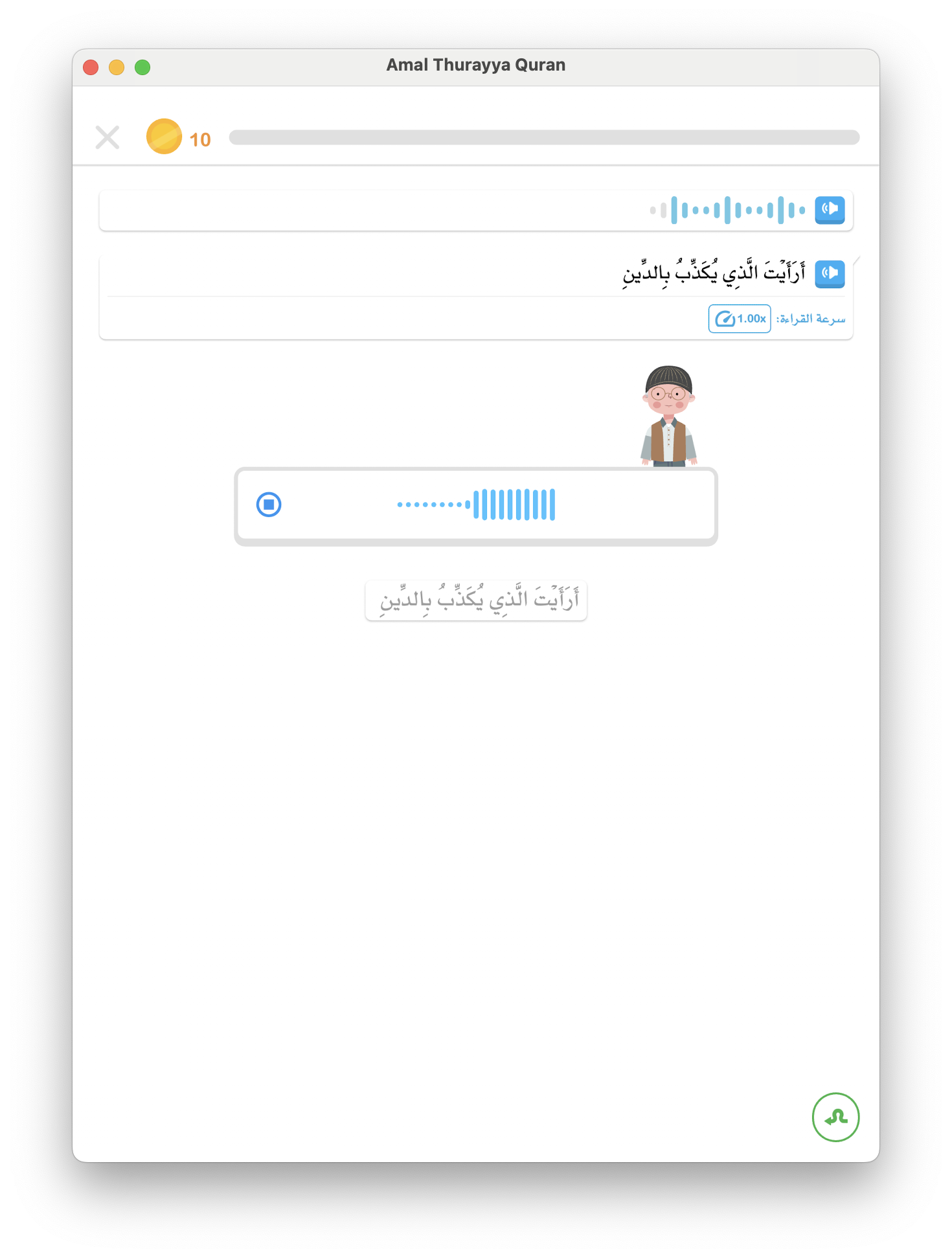
The biggest mistake parents make is playing Quran audio and expecting children to absorb it passively. Memorisation requires active recitation — saying the words aloud, repeating them until correct, and using them in prayer. Thurayya's AI listens to children recite and ensures they are actually learning, not just hearing.
Frequently Asked Questions
How young is too young for Quran recitation?
It is never too young for Quran exposure. Babies benefit from hearing Quran recitation. Structured recitation learning with repetition typically works well from age 3-4. Thurayya is designed for ages 3-8.
What is tajweed and does my child need it?
Tajweed is the set of rules governing proper Quran recitation — pronunciation, elongation, pauses, and articulation points. Yes, correct tajweed matters. Thurayya's AI is specifically trained to detect tajweed errors in children's recitation and correct them gently.
Should I hire a Quran teacher or use an app?
Ideally both. A human Quran teacher provides personalised guidance and spiritual mentorship. Thurayya provides daily practice between lessons, making each lesson more productive. For families without access to qualified Quran teachers, Thurayya can serve as the primary recitation practice tool.