Arabic for Muslim Families in America
A practical home-learning guide for Muslim families in America trying to keep Arabic alive through short daily routines, realistic goals, and the right app path.
For many Muslim families in America, the Arabic challenge is not commitment. It is consistency. Parents care deeply about Arabic, but family life, school schedules, and limited local support make it hard to build a daily habit.
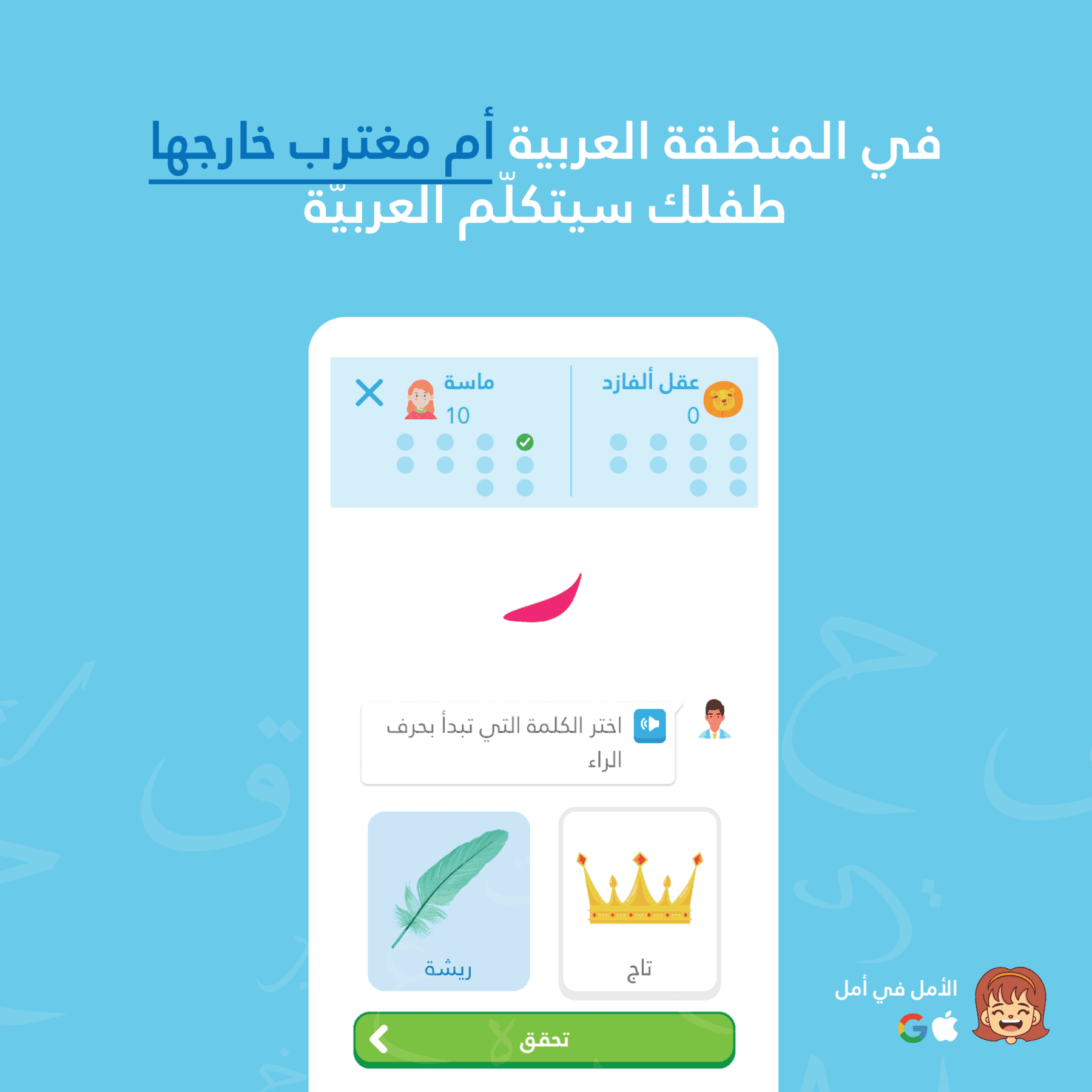
The most realistic solution is a short home routine. Use Amal for Arabic letters, reading, and pronunciation, and add Thurayya if Quran recitation is also a current goal.
What works best?
Pick one daily slot, keep the session short, and avoid trying to recreate a full classroom at home. For most families, routine beats intensity.
Frequently Asked Questions
Can children learn Arabic in a non-Arabic-speaking environment?
Yes, if the family builds a repeatable habit and uses the right support tools consistently.
What should parents prioritize next?
Most children move faster when the family protects one small daily block instead of changing methods every week. Start with letters and sounds, move into simple reading, and review more often than you introduce new tasks. Parents do not need a perfect curriculum on day one. They need a sequence they can actually keep.
How can the routine stay realistic?
A realistic home routine is usually ten to fifteen minutes, four or five days a week. One child-first tool, one small goal, and one short review are enough. If the child ends the session confident, the family is more likely to come back tomorrow.
Families who want a clearer daily path usually pair Amal with one focused reading routine, then use the wider blog to plan the next step at home.
What should parents prioritize next?
Most children move faster when the family protects one small daily block instead of changing methods every week. Start with letters and sounds, move into simple reading, and review more often than you introduce new tasks. Parents do not need a perfect curriculum on day one. They need a sequence they can actually keep.
How can the routine stay realistic?
A realistic home routine is usually ten to fifteen minutes, four or five days a week. One child-first tool, one small goal, and one short review are enough. If the child ends the session confident, the family is more likely to come back tomorrow.